

Why Ghana's Biggest Names Are Still Dropping Albums in the Age of the Single
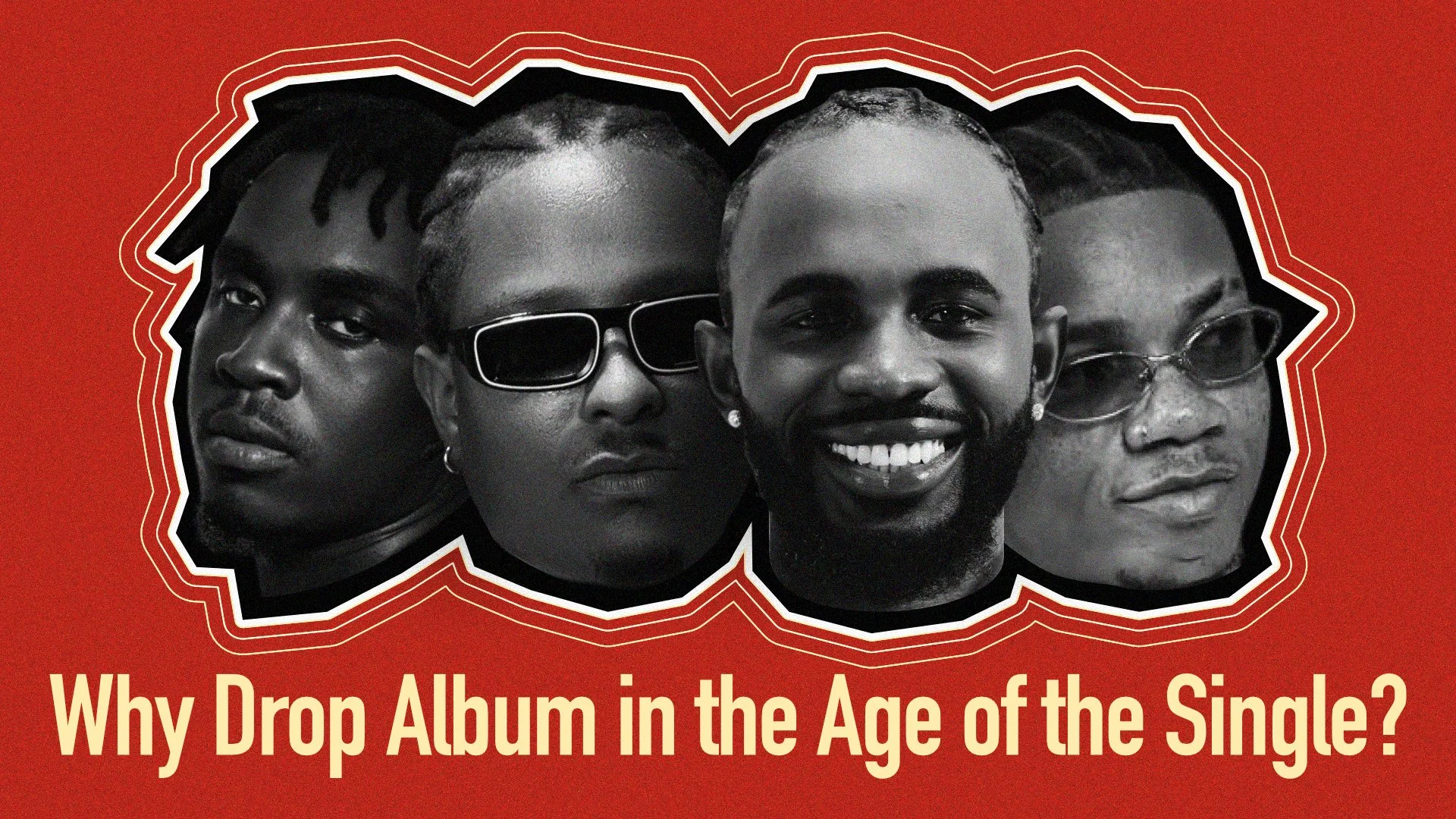
In the space of five weeks, four of Ghana's most recognisable artists released full bodies of work. KiDi put out Where Do We Go From Here? on 27 August, Black Sherif and Kweku Smoke both released projects on 4 September, and Kelvyn Boy followed with 2nd Step on 25 September. That looks like swimming against the current. The prevailing argument is that streaming platforms reward freshness, so an album registers as one event while twelve singles register as twelve, and many albums have become the end point of a run of singles rather than the main event. So why are these artists still doing it, and what should independent acts take from it?
The first thing that stands out is how compact these projects are. Sun Sherif is six songs and roughly fifteen minutes. 2nd Step runs to twelve songs and 35 minutes, and KiDi's album is fifteen songs in 39 minutes, a tracklist he reportedly cut down from around 40 recordings. Kweku Smoke's No Days Off has thirteen tracks. The same logic is visible across the continent: Wizkid and Asake's REAL, Vol. 1 is four tracks in under eleven minutes, and its lead single "Jogodo" became the fastest African song to reach 10 million Spotify streams, in seven days. The body of work has not died. It has been edited.
Almost none of these projects arrived cold. Kelvyn Boy spent 2026 releasing singles including "Backa", "Watch It", "Araba" and "Weather for 2", the last of which made the album. KiDi teased "Babylon" and "Signature" ahead of his release. Kweku Smoke put out "Faith" with Lasmid before the full album. Black Sherif's "Find a Way", his anthem for Ghana's 2026 World Cup campaign, heralded the lighter mood of Sun Sherif. Singles do the discovery work. The project does the retention work.
As for how they are doing, the honest answer is early and uneven. KiDi's album was reported at number one on Audiomack's Ghana album chart, with 14.5 million plays on its album page, and at number one on Apple Music Ghana's Top Albums chart. Kweku Smoke's album showed 3.84 million Audiomack plays when I checked, and it follows Walk With Me, reportedly past 100 million streams worldwide. Afrocritik's review praised his perspective but wanted more musical variation. I could not find public streaming totals for Sun Sherif, though its predecessor Iron Boy won Album/EP of the Year at the 2026 Telecel Ghana Music Awards, and his homecoming show drew 30,000 people to the University of Ghana Sports Stadium. Kelvyn Boy's album is only days old, so it is too soon to judge. These figures come from different platforms and time windows, so they are not a leaderboard.
What a body of work does is give an artist things a single cannot. Awards still recognise projects, as Iron Boy's win shows. Tours are built around them: KiDi planned a headline concert in which he would perform every track on his album. They also carry identity. It had been more than five years since KiDi's last album, Golden Boy, and that gap turned the release into a moment. And Sun Sherif has no obvious single built to chase a trend and no feature list designed to maximise streams, which makes it a statement of who Black Sherif is, not a bid for a playlist slot.
For independent artists, the credit lines are the most useful detail. Sherif's EP is credited to Blacko Management and Empire, Kweku Smoke's album to Scatter Der, Kelvyn Boy's to Blakk Arm Entertainment under licence to Ziiki Media, and KiDi's to Black Boy Joy under exclusive global licence to Encore Recordings. The deal terms are not public, so this shows structure rather than ownership, but the pattern is clear: an artist-led imprint at the front, a licensing or distribution partner behind it. The collaborators tell a similar story. KiDi's features are entirely Ghanaian, as are Kelvyn Boy's and Kweku Smoke's three guests. These artists are building for a home audience first.
The lesson for emerging acts is not "release an album". It is to release a project when there is an audience ready to receive it, because a body of work multiplies existing demand rather than creating it. Edit hard, and treat every track as one that has to earn its place. Lead with singles, land with the project, and build the live show and visuals around it. And set up your own imprint early, so that partners license your work instead of absorbing your brand. The album's job has changed from product to proof, and for an independent artist, proof is what turns streams into a career.
Written by:
Tilly Akua Nipaa (Matilda Mensah Marfo)
