

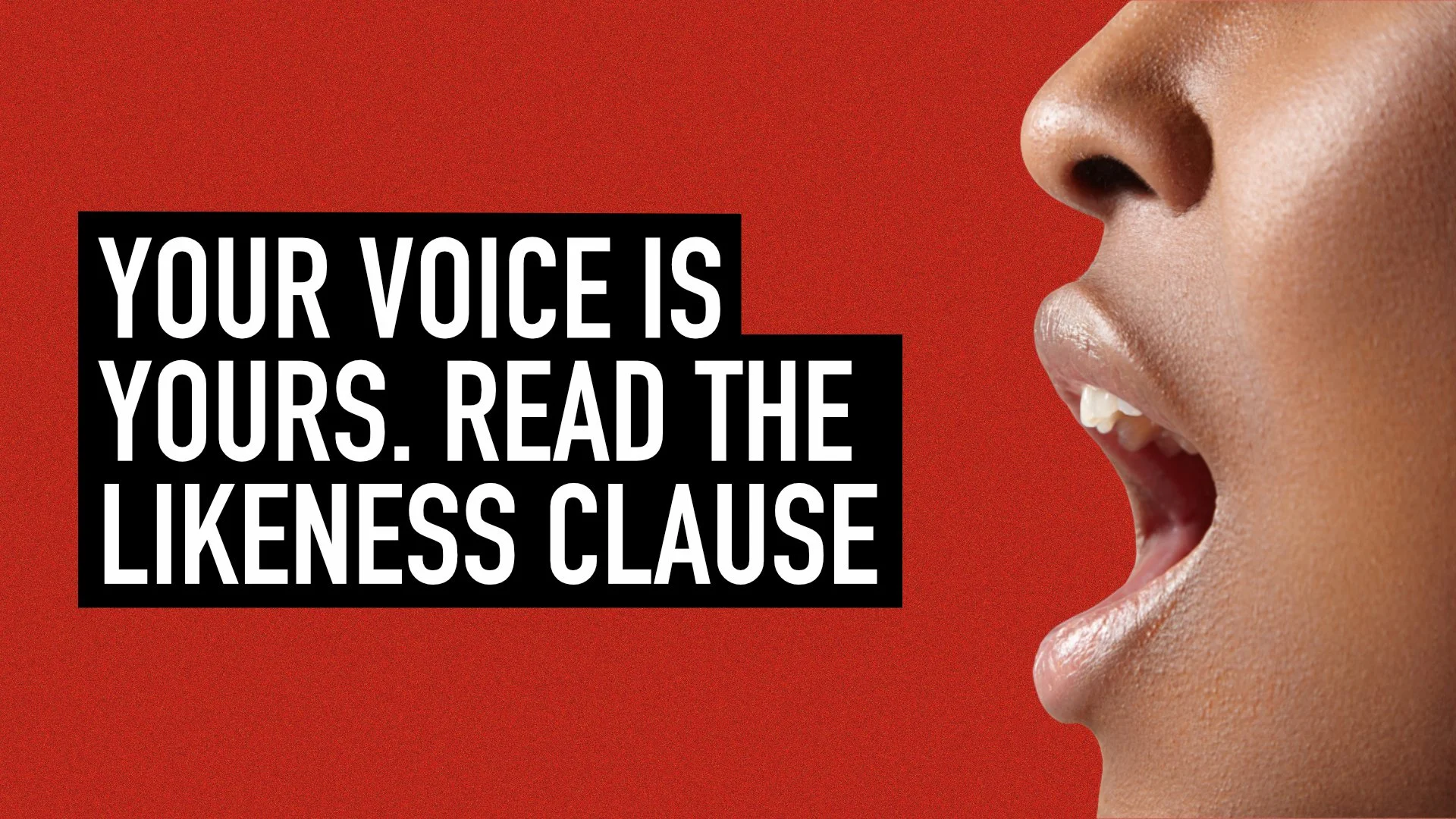
Chipo, a Zimbabwean singer based in London, landed a campaign with a phone brand and nearly signed on the spot. Buried on page six was the right to use her name, image and voice "in all media now known or hereafter devised", including digital versions created with AI. She'd have been paid once for a single campaign, and the brand could have kept using a copy of her voice long after it ended. From Harare to Houston, artists are signing clauses like this without noticing what they give away.
It's fair for a label or brand to use your name, photos and biography to promote the work in the deal. It isn't fair for that right to stretch to merchandise, endorsements or anything else without your approval. Never grant AI rights to your voice or face by accident: if you agree to it at all, it should be a separate agreement with its own fee. For brand deals, also ask what you're not allowed to do while you're signed, such as working with a competitor.
This week, search your contracts for "name", "likeness", "voice" and "image". Check that each one is limited to promoting the work in that deal, and that nothing lets anyone create a digital version of you without a separate, paid agreement. Take the course on Crux Global Academy: cruxmusic.global/academycrux.
