

From Vancouver to Lugogo: What Joshua Baraka's 2026 Tour Route Says About Building an East African Career
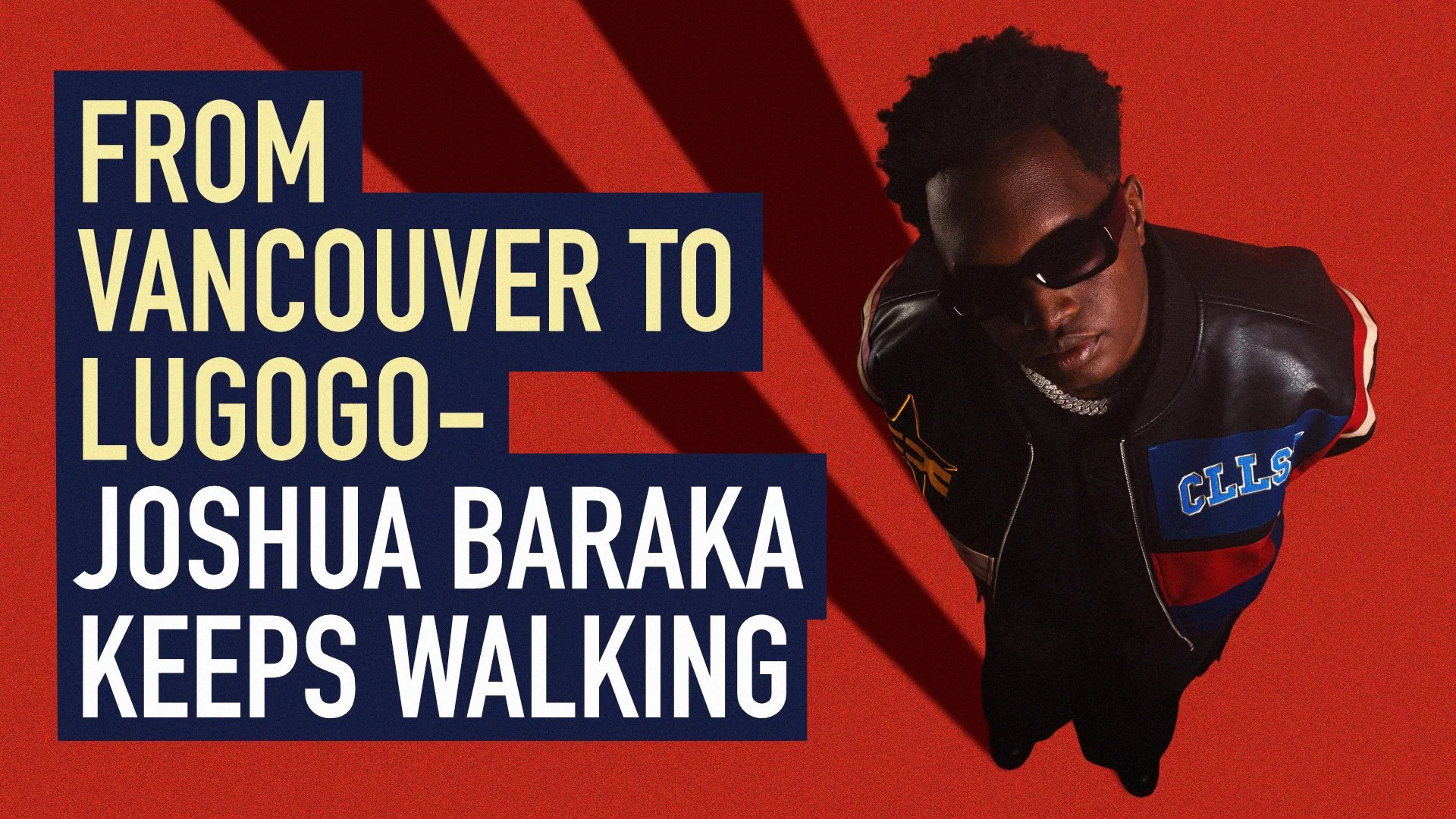
Most emerging African artists follow a predictable script: build at home, then take the sound abroad once there's a domestic fanbase to point to. Joshua Baraka did it the other way round. His 2026 calendar opened far from Uganda, with dates across Canada in June (Edmonton, Calgary, Vancouver, Toronto and Ottawa) and a stop in Melbourne, Australia in July, building on international dates he had already played in London, Manchester, Berlin and Copenhagen the year before. Only in late August did the tour turn homeward, after Johnnie Walker named him the face of its "Keep Walking" campaign in Uganda. The international leg wasn't a stepping stone home. It was proof the diaspora audience was already there, waiting.
What followed was a tour most Ugandan artists never get to run: a multi-city domestic leg, under the B'rakaland EA banner, that took Baraka to Gulu and Arua in the north, then Mbale in the east and Mbarara in the west, before the whole route closes with a grand finale in Kampala on 28 November, at the Lugogo sports complex, with Kenyan star Bien-Aimé Baraza and Ugandan singer Naava Grey joining him. Gulu and Arua, in particular, rarely feature on any artist's calendar. Reaching fans in Uganda's secondary cities is expensive and slow to monetise, which is why so few artists try it without a reason.
That reason, here, was a brand. The "Keep Walking" sponsorship did more than cover costs: it gave the tour a narrative spine, framing each stop as another chapter in Baraka's own journey from an unknown voice to one of Uganda's most recognisable exports. That narrative only works if the audience can see the arc, which is why Kampala comes last rather than first. A homecoming show in January would be an opener. A homecoming show in November, after Canada, Australia and four Ugandan cities, is a culmination, and it reads as one in every piece of press covering the tour.
Is the structure an anomaly? Not really, once the pieces are laid out. It looks less like an accident of scheduling and more like sequencing with intent: go where the diaspora already knows the songs, secure the partner who can fund the harder work of reaching fans outside the capital, and save the home crowd for the moment when the story has the most weight behind it.
For emerging East African artists, and anyone backing them, three things carry over. First, diaspora demand does not require a "proven" home base to tap into; it can be built in parallel, sometimes even first. Second, brand partnerships are often the only realistic way to fund touring beyond the capital, and upcountry shows are worth seeking that funding for, since that reach is rare and memorable precisely because so few artists manage it. Third, where a homecoming show sits in the calendar is a storytelling decision as much as a logistical one: closing a year-long journey in your own city says something a season-opener never can.
Written by: Tilly Akua Nipaa (Matilda Mensah Marfo)
